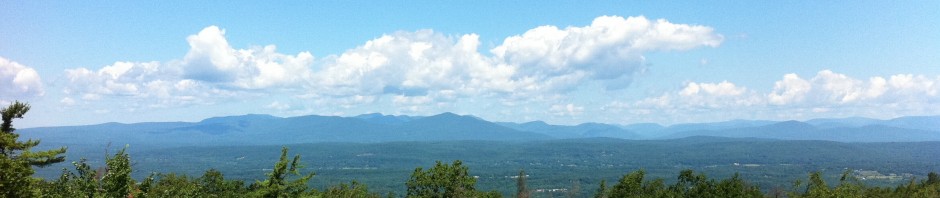
HOWARD R. FELDMAN

Professor, Biology Department

Touro College

Research Associate, Division of Paleontology (Invertebrates)

The American Museum of Natural History

(B.A. Rutgers University; M.A. New York University; M.A. Hunter College, C.U.N.Y.; Ph.D. Rutgers University)


Courses taught

Physical Geology

Historical Geology

Environmental Geology

Stratigraphy

Paleobiology

Evolution

Principles of Biology

Principles of Zoology

Introduction to Ecology

Anatomy & Physiology

The Human Body


Research and Teaching Interests

My research program currently involves two themes: (1) the paleontology, paleoecology, evolution, biogeography and stratigraphy of the brachiopods and invertebrate communities of the Middle East and, (2) the community ecology of Paleozoic level-bottom faunas in New York State. Numerous students have worked closely with me and have been involved in aspects of my research projects conducted at the American Museum of Natural History (amnh.org). At the college level I introduced new geology and paleobiology courses and taught them with an emphasis on a hands-on approach that included quite a bit of field experience in and around the New York City area. In 1989 I was awarded the John Moss award (NAGT) for excellence in college teaching. Students have also accompanied me on trips to the Hudson Valley to study excellent exposures of Ordovician through Devonian strata as well as the ecology of the area 


I am particularly interested in the faunal provinces along the southern margin of the Tethys with emphasis on the Jurassic Ethiopian Province. Based on past work in the Ethiopian Province, brachiopod data are becoming plentiful enough to shed light on the geologic history of the region. Students are currently assisting me in exploring the following questions:


(1) How are brachiopods distributed along the southern flank of the Tethyan Realm? Much progress has been made since Ager’s (1973) comment that Jurassic brachiopods have not yet been sufficiently revised to make possible any noteworthy conclusions regarding their geographical distribution and that many forms are so generalized in character that it is difficult to plot their distribution.


(2) How closely can the brachiopod faunas of the Levant, particularly Israel [PHOTO 9] and Sinai , be correlated with those of other regions within the Tethyan Realm? With additional collecting it will be possible to correlate the stratigraphic sections and determine the taxonomic and paleogeographic relationship of the faunas. Preliminary comparisons with the Israel faunas have shown that some genera from Saudi Arabia have not yet been discovered in the Negev, Somalia or Tunis


(3) The Jurassic margin of the Levantine platform comprises the calcareous Taurus backbone along the Neo-Tethyan margin. Biogeographic analysis of the brachiopod faunas in the Levant will give insight into the sequence of rifting within the southern Tethyan Platform. Work on the geographic distribution of brachiopod genera and species in the areas discussed above is in progress and more comparative work, especially between the faunas of Saudi Arabia and Israel, as well as those of Madagascar and the Cutch, must be done before any real attempt at closer correlation can be achieved.


I intend to explore the use of sequence stratigraphic analysis as a check on biostratigraphic correlation and as a means of integrating facies information. Paleoecologic analysis of the fossils collected will enable me, along with my friend Mark A. Wilson (mwilson@wooster.edu), to study the many genetic relationships between fossil distributional patterns and depositional sequences because paleoecological changes are closely correlated with fluctuations in sea level and sedimentation. Sequence stratigraphy provides a temporally constrained framework for the evaluation of ecological and evolutionary events. For example, it may permit precise evaluation of the timing of immigration, extinction or origination of new taxa in a region or on global scales.


In addition, I hope to complete a regional study of the paleoecology of the Onondaga Limestone across the entire state of New York. Collecting localities in western New York will provide data that will enable me to obtain an accurate picture of this key Middle Devonian formation in terms of ecology and faunal constituents. The resulting study will eventually be useful in a regional correlation across the northeastern United States.


I am presently studying the Ordovician Martinsburg Formation in the Hudson Valley of southeastern New York with my colleague John Smoliga to determine if there is a relationship between the faulting and (sulphide) mineralization. We are compiling structural data with the intent of making a geologic map of the Shawangunk Conglomerate and Martinsburg Shale at Mohonk (Mohonk.com) in order to determine the general structure of the region [PHOTO 4]. I am also collecting data on a faunule from the same formation and looking at the taphonomy as well as a possible new species of Sowerbyella with my mentor Art Boucot and Mark A. Wilson.


Research Appointments

            SYMBOL 183 \f "Symbol"   The American Museum of Natural History, Division of Paleontology  

                 (Invertebrates), Research Associate, 1978-present.

            ·   Geological Survey of Israel (http://www.gsi.gov.il/), Paleontology Division,                       Visiting Scientist, 1978-present.


Professional Affiliations

Geological Society of America

International Palaeontological Association

New York State Geological Association

Palaeontological Association

Paleontological Society

Society for Sedimentary Geology


Selected Publications

Feldman, H.R. 1977. Paleoecology and morphologic variation of a Paleocene terebratulid brachiopod (Oleneothyris harlani) from the Hornerstown Formation of New Jersey. Journal of Paleontology, 51:86-107.


Feldman, H.R. 1977.Notes on and description of Oleneothyris fragilis (Morton), 1828 (Brachiopoda, Terebratulidae). American Museum Novitates, 2621:1-16.


Feldman, H.R. 1980. Level-bottom brachiopod communities in the Middle Devonian of New York. Lethaia, 13:27-46.


Feldman, H.R. 1985   Brachiopods of the Onondaga Limestone in central and southeastern New York. Bulletin, American Museum of Natural History, 179:289-377.


Feldman, H.R. 1987.A new species of the Callovian (Jurassic) brachiopod Septirhynchia from northern  Sinai. Journal of Paleontology, 61:1156-1172.


Feldman, H.R. and E.F. Owen. 1988. Goliathyris lewyi, new species (Brachiopoda, Terebratellacea), from the Jurassic of Gebel El-Minshera, northern Sinai. American Museum Novitates, 2908:1-12.


Feldman, H.R. and P.R. Racheboeuf. 1990. Chonetacean brachiopods of the “Pink Chonetes” Zone, Onondaga Limestone (Devonian, Eifelian), central New York. American Museum Novitates, 2982:1-16.


Feldman, H.R., E.F. Owen and F. Hirsch. 1991. Brachiopods from the Jurassic of Gebel El-Maghara, northern Sinai. American Museum Novitates, 3006: 1-28.


Feldman, H.R. 1994. Brachiopods of the Onondaga Formation, Moorehouse Member (Devonian, Eifelian), in the Genesee Valley, western New York. Bulletins of American Paleontology, 107:1-56.        


Feldman, H.R. and  C.E. Brett. 1998. Epi- and endobiontic organisms on Late Jurassic crinoid columns from the Negev Desert, Israel: implications for coevolution. Lethaia, 31:57-71.


Feldman, H.R. and J. Wilson. 1998. The Godzilla Syndrome: scientific inaccuracies of prehistoric animals in the movies. Journal of Geoscience Education, 46:456-459.


Feldman, H.R., E.F. Owen and F. Hirsch. 1991. Brachiopods from the Jurassic (Callovian) of Hamakhtesh Hagadol (Kurnub Anticline), southern Israel. Palaeontology, 44:637-658.


Feldman, H.R. 2005. Paleoecology, taphonomy and biogeography of a Coenothyris community (Brachiopoda, Tereratulida) from the Triassic (Upper Anisian-Lower Ladinian) of Israel. American Museum Novitates, 3479:1-19.


Hirsch, F.,  J. Bassoullet, E. cariou, B. Conway, H.R. Feldman, L. Grossowicz, A. Honugstein, E.F. Owen and A. Rosenfeld. 1998. The Jurassic of the southern Levant. Biostratigraphy, palaeogeography and cyclic events, pp. 213-235. In S. Carasquin-Soleau & É. Barrier (eds.), Peri-Tethys memoir 4: epicratonic basins of Peri-Tethyan platforms, Mémoires du Muséum national d’Histoire Naturelle, 179:1-294, Paris.


In Press

Feldman, H.R. and J. Thompson. Geology, biodiversity and climbing in the ‘Gunks.’ Natural History Magazine


Feldman, H.R, Boucot, A.J., Smoliga, J. and Wilson, M.A. A brachiopod faunule  from the Ordovician Martinsburg Shale, Shawangunk Mountains, New York. Geological Society of America Annual Meeting, Philadelphia, Pennsylvania.    


Ilani, S., Kronfeld, J., Krumbein, W.E.,  Feldman, H.R. and A. Rosenfeld. The first known intact seven nozzle stone oil lamp from the Second Temple Period. Geological Society of America Annual Meeting, Philadelphia, Pennsylvania.


Other Services

SAT II biology and earth science tutoring